How I Saved a $200 Heating Pad With a $5 Repair
Some appliances become part of the family. Our Battle Creek heating pad was one of them. For more than ten years it was there for every sore back, stiff neck, and cold winter night. Then one day it just… didn’t warm up.
The sensible thing would have been to order a new one. These pads cost around $200, and a decade is a good run. But the inner tinkerer in me wasn’t having it. A heating pad is basically some wire, a little bit of control circuitry, and a lot of fabric. How hard could it be?
Opening It Up
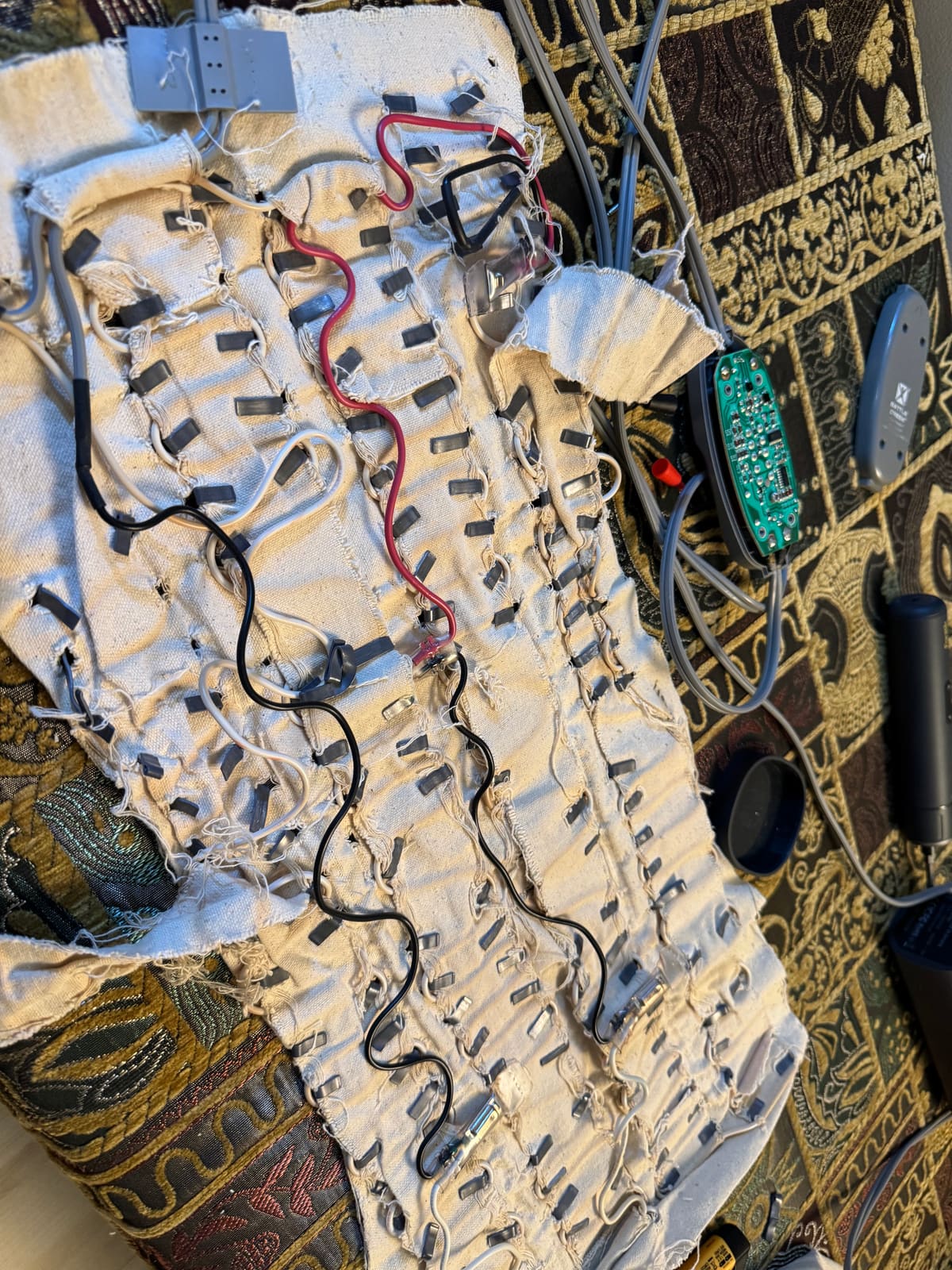
Out came the seam ripper. Under the cover there’s a fabric panel with the heating element woven back and forth through it, held in place with small tabs, plus the wiring that connects it all back to the controller (that’s the photo at the top of this post).
It was a little intimidating at first. That’s a lot of wire for something that’s supposed to be simple.
Finding the Culprit
With a multimeter, I worked through the circuit one section at a time, checking continuity until I found where it stopped. The element itself was fine. The culprit was the thermometer: the little temperature sensor that tells the pad when it has reached temperature. With that sensor dead, the pad stopped heating. After ten years of heating up and cooling down, it had finally worn out.
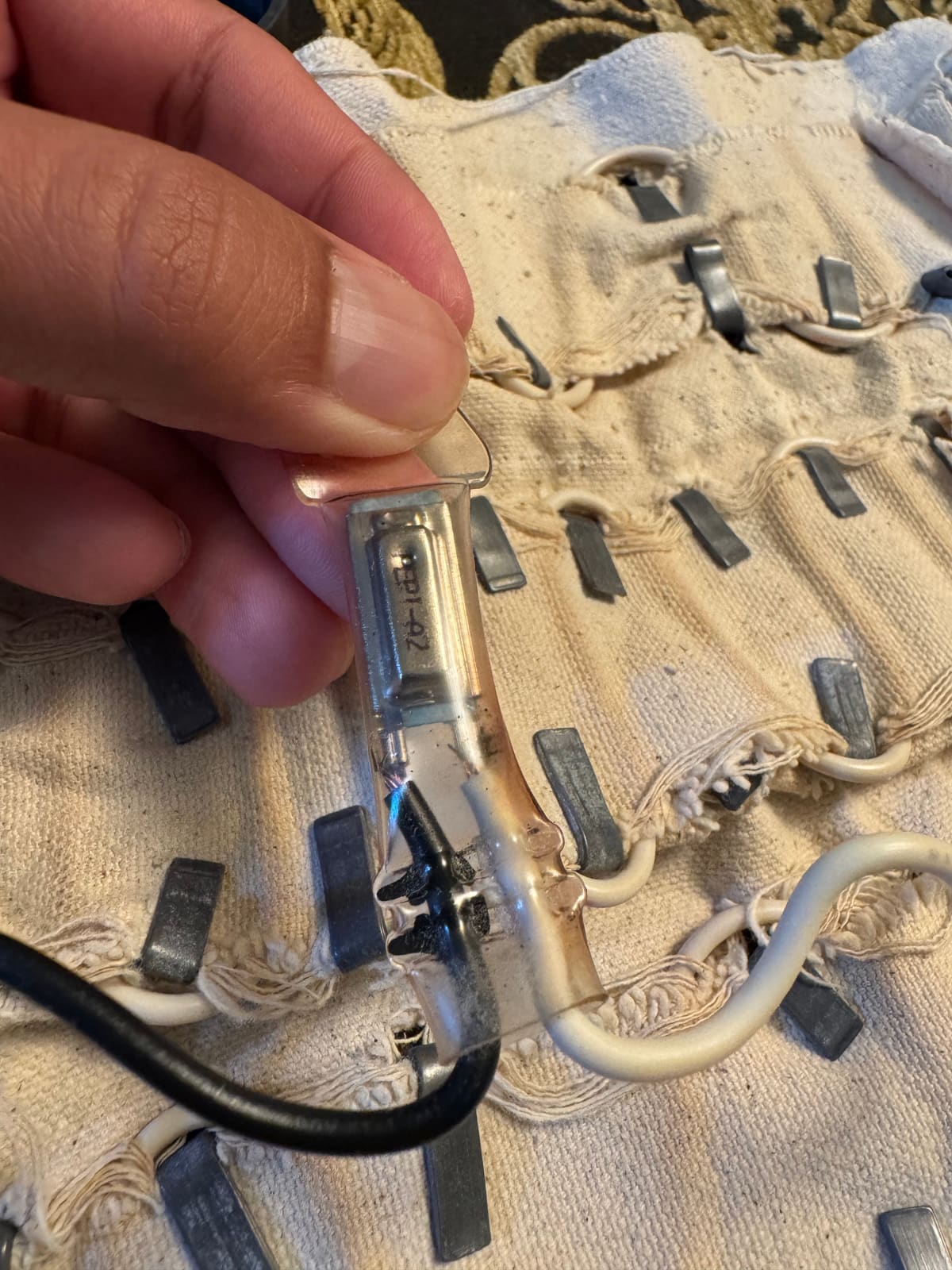
Ten years of faithful service, taken down by one tiny sensor.
The $5 Fix
A replacement temperature sensor cost about $5. I swapped it in, made solid connections, sealed everything with heat shrink, and tested it again before closing anything up.
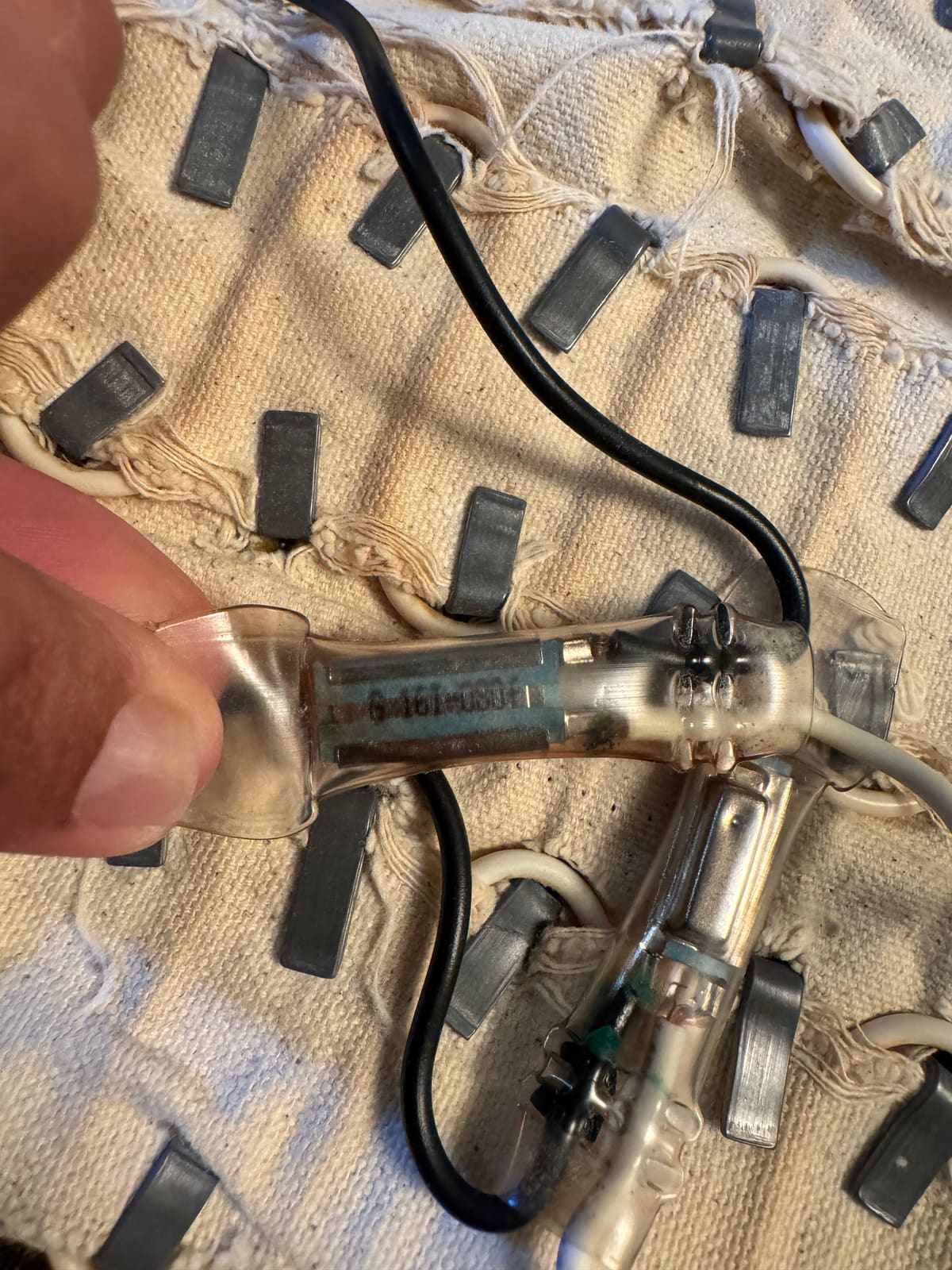
Then came the moment of truth: plug it in, wait a minute, and… warmth. Sweet, sweet warmth.
The Scoreboard
- New heating pad: about $200
- Replacement temperature sensor: about $5
- Satisfaction of fixing it yourself: priceless
Better yet, a perfectly good pad stayed out of the landfill, and it’s ready for another decade of sore backs.
A Word of Caution
Heating pads sit against your body for long stretches, so any repair needs to be done carefully. Use parts with the correct rating, insulate every connection properly, and never bypass a safety component to get it working. If you’re not comfortable with electrical work, it’s worth having someone experienced take a look.
Got something that “just needs replacing”? Before you toss it, ask us. It might only need a $5 part.